
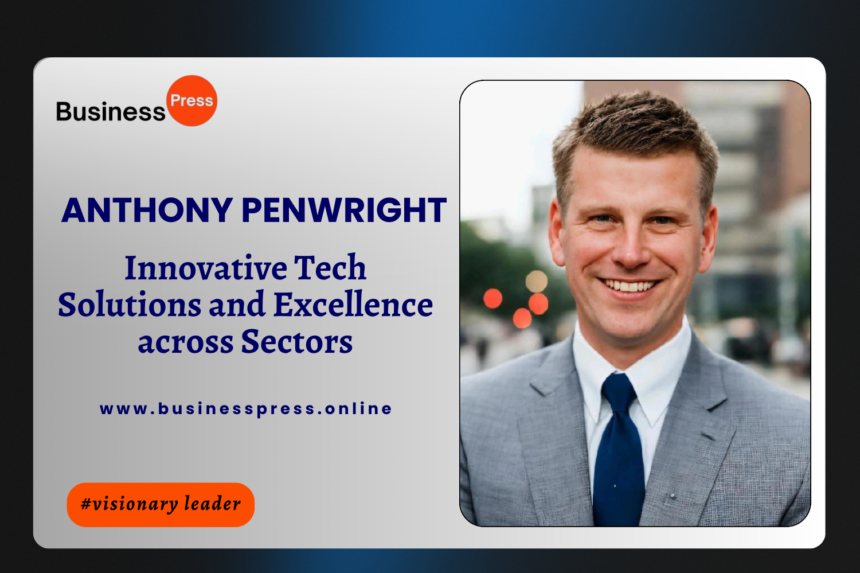
We recently had the privilege of speaking with Anthony Penwright, a seasoned technology and innovation leader with over 20 years of global experience delivering complex digital transformation programs valued at more than £1BN. Having led strategic initiatives across the UK Government, Cisco, Wipro, and NEOM, Anthony brings deep expertise in Smart Cities, Artificial Intelligence, IoT, Blockchain, and enterprise governance frameworks.
During our conversation, he shared insights into enterprise transformation, AI strategy, governance execution, and his long-term entrepreneurial vision.
Artificial Intelligence and the Enterprise Shift
To begin, we asked, “How do you see artificial intelligence reshaping enterprise strategy over the next few years?”
Anthony responded, “AI is no longer theoretical. It is already embedded in how organizations develop products, execute delivery, and optimize decision-making. The pace of adoption is accelerating across industries.
However, the greater challenge lies in governance and workforce adaptation. Ethical frameworks are still evolving, and there are legitimate concerns about job displacement. Organizations that will succeed are those that combine AI capability with structured change management.”
He further shared that he is currently completing an MBA in Artificial Intelligence to strengthen his understanding of enterprise AI governance.
Governance and Large-Scale Transformation
Shifting the discussion toward execution, we then asked, “What separates successful transformation programs from those that struggle?”
He explained, “In large-scale initiatives, governance is often misunderstood as bureaucracy. In reality, governance creates alignment.
When leading programs involving more than 450 professionals, I found that clear accountability, defined KPIs, and transparent communication are critical. Without structured oversight, transformation efforts lose momentum. Strong governance frameworks build trust and accelerate execution.”
The Human Factor in Digital Change
To explore the leadership dimension further, we asked, “What role does empathy play in enterprise transformation?”
Anthony shared, “Technology rarely fails on its own. Resistance to change is the bigger risk. Transformation requires people to shift mindsets and behaviors.
Empathetic leadership ensures that people understand the purpose behind change. Leaders must remain present, accessible, and transparent. When teams feel valued and included, execution becomes significantly smoother.”
The Early Career Pivot
Curious about his journey, we asked, “Can you reflect on how your professional path began?”
Anthony responded, “My career began in the Police Force. At that time, I was seeking stability after navigating personal challenges. While I valued public service, I was drawn to the technology supporting operations.
A mentor encouraged me to pursue technology more seriously, recognizing my ability to connect people and systems. I invested my savings into professional IT qualifications, and that decision shaped my transition into enterprise digital transformation.”
Innovation Through Ecosystem Thinking
We then asked, “How can large organizations create sustainable innovation?”
He stated, “Innovation requires ecosystem thinking. It starts with clearly defining real business problems rather than attaching predefined solutions.
Organizations must cultivate partnerships with accelerators, venture capital networks, and technology providers. Proof-of-concept testing ensures measurable value before scaling. Additionally, commercial models must evolve. Traditional procurement processes often restrict startups. Flexible frameworks enable innovation to thrive.”
Looking Beyond Enterprise
As our conversation concluded, we asked, “What are your long-term aspirations?”
Anthony concluded, “While I continue to thrive in senior enterprise leadership roles, I also aspire to build something independently.
I am currently in the pre-seed stage of developing a validated product concept. My ambition is to create a culturally strong organization where personality, emotional intelligence, and diversity drive innovation. Skills can be developed, but character and alignment are foundational.”
Our discussion with Anthony Penwright highlights a defining principle of modern enterprise leadership: sustainable transformation demands more than advanced technology. It requires governance discipline, strategic clarity, and leaders who understand that people remain at the center of progress.
Connect with Anthony Penwright on LinkedIn to gain industry insights.
Also Read:-
Reggie James: Founder Of Digital Clarity & His Marketing Strategies For Sustainable Success
Arild Karlsen: Delivering Omega-3 From The Cleanest Waters In The World