
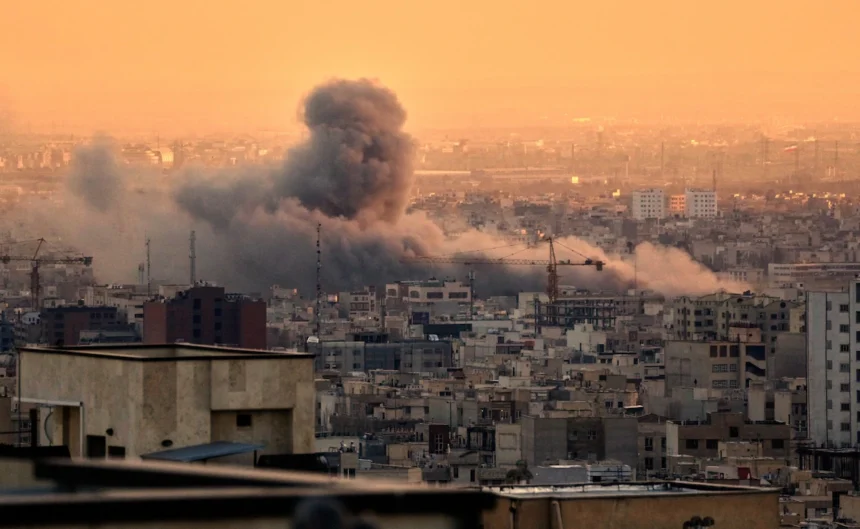
Initially, on Tuesday, explosions were heard over Dubai as the military of the United Arab Emirates attempted to stop incoming Iranian fire, forcing the nation to temporarily seal its airspace while Israel conducted further strikes, extending the conflict into its eighteenth day in a row.
The Israeli military announced early on Tuesday that it had started a “wide-scale wave of strikes” throughout Iran’s capital and that it was also intensifying attacks on Hezbollah targets in Lebanon that Iran supports. As Israel confirmed two approaching Iranian salvos, it announced the latest strikes.
While a few ships crossed the Strait of Hormuz, a crucial route that typically carries one-fifth of the world’s oil, concerns about a worldwide energy catastrophe persisted.
According to US President Donald Trump, he has asked about six nations to provide warships to maintain the chokepoint canal, but his requests have not resulted in any immediate pledges. A “very bad future” for NATO might result from a lack of collaboration, according to an earlier threat from the US president.
Iranian attacks on businesses in and around the strait have caused shipping to slow to a trickle, sharply raising oil prices and putting pressure on Washington to take something to alleviate the suffering of consumers and the world economy.
Also Read:
Greg Abraham: Transforming CTV Advertising With Codor K Media
Dr. Sofica Bistriceanu’s Inspiring Journey As A Multifaceted Expert