
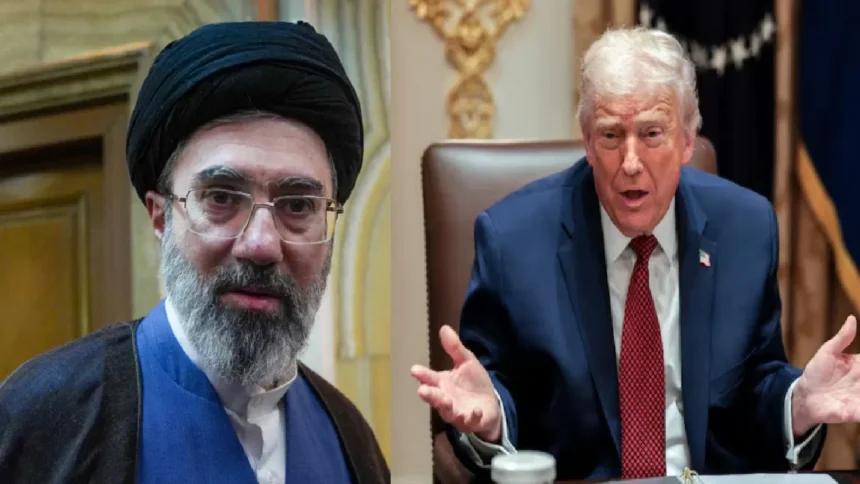
Three days before the ceasefire expires and with no new peace talks planned, Iran rekindled the standoff by firing at ships trying to cross the Strait of Hormuz on Saturday, sparking a new escalation amid questions about who makes the decisions in Tehran. This came after a brief moment of global relief over the Strait of Hormuz reopening in a path towards peace.
In contrast to Iranian Foreign Minister Abbas Araghchi’s Friday declaration that the Strait is open in a corridor “coordinated by Iran” and US President Donald Trump’s subsequent remarks regarding a more comprehensive agreement with Iran, Iran’s Revolutionary Guard (IRGC), which only reports to Iran’s supreme leader, hinted that it determines the conditions of navigation in the Strait of Hormuz.
Following Friday’s announcements, the IRGC warned on Saturday morning that the Strait “reverted to its previous state of strict military control” as the US blockade continues. The remaining tankers chose to abruptly turn around. The IRGC then proceeded to fire on and harass ships attempting to cross the Strait of Hormuz.
The IRGC warned that “no vessel should make any movement from its anchorage in the Persian Gulf and the Sea of Oman, and approaching the Strait of Hormuz will be considered as cooperation with the enemy” and would be targeted after announcing on Saturday night that the strait is closed until the US blockade is lifted.
Also Read:
For the First Time Since the full-Scale Invasion, a Senior NATO Delegation Travels to Ukraine
Dr. Sofica Bistriceanu’s Inspiring Journey As A Multifaceted Expert