Volatility is no longer an exception. It is the environment. Economic cycles, geopolitical shifts, and market noise are constant. The real test of leadership today is not avoiding uncertainty, but learning how to think clearly, act decisively, and stay anchored to long-term vision while the ground keeps moving.
Leading Through Economic Volatility
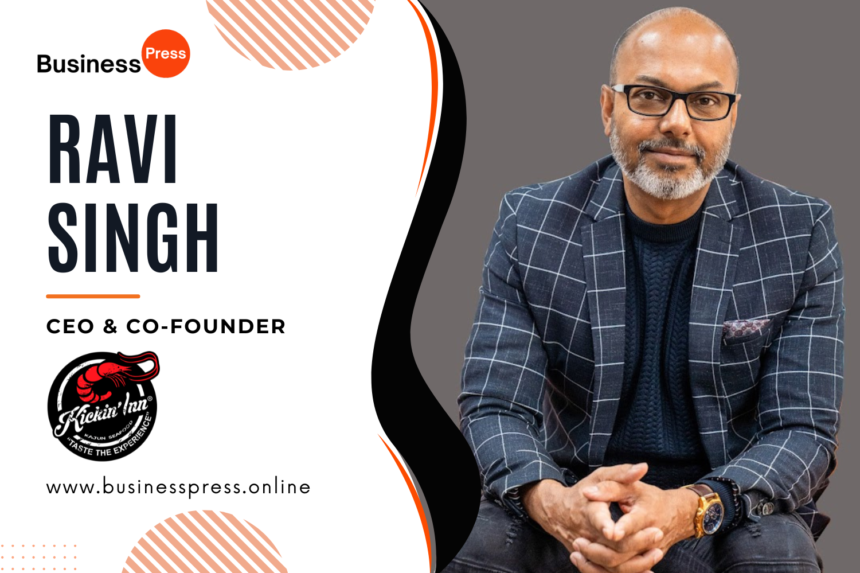
We asked Ravi Singh how global business leaders can maintain clarity in an increasingly unstable economic environment. “How do you personally maintain clarity and confidence while leading through volatility?”
Ravi Singh said, “For me, clarity comes from separating signal from noise. In volatile times, leaders get overwhelmed not because there is too little information, but because there is too much of it, often emotional, speculative, and fear-driven. I have learned to slow my thinking while speeding up execution. That means grounding decisions in data, fundamentals, and first principles, not headlines or market panic.
Confidence does not come from certainty. It comes from preparation. I spend a lot of time scenario planning and asking what if before it happens. When you have already thought through multiple outcomes, volatility becomes manageable rather than paralysing. I also focus heavily on controllables such as sales drivers, cost discipline, leadership capability, and culture. You cannot control interest rates or global supply chains, but you can control how disciplined, agile, and aligned your organisation is.
Personally, I stay clear by maintaining routine, reading, reflecting, and staying close to the numbers and the frontline. Leaders who disconnect from operations during uncertainty lose credibility and insight. I want to feel the pulse of the business daily. That keeps my decisions grounded and my confidence earned, not assumed.
Most importantly, I remind myself and my teams that uncertainty is not new. Business has always been cyclical. What changes is how leaders show up. Calm leadership creates calm organisations. Panic leadership creates fragility. My job is to be the steady hand, even when the seas are rough.”

Leadership Under Pressure in Hospitality
We then followed up by asking how these principles translate inside the hospitality industry. Hospitality has faced inflation, supply chain disruption, and labour pressures. “What leadership principles have helped you navigate these challenges without losing long-term focus?”
Ravi Singh reply – “The first principle is discipline over drama. Inflation and cost pressure force tough decisions, but emotional decision-making destroys long-term value. We have stayed focused on fundamentals such as margin protection, operational efficiency, and sales momentum. When costs rise, you do not retreat. You sharpen execution. Every line item must earn its place.
The second principle is people development over short-term fixes. Labour pressure tempts businesses to lower standards or overwork teams. That is a fast path to burnout and brand damage. Instead, we have focused on training, leadership depth, and internal progression. When you invest in capability, productivity follows. Strong teams outperform larger teams.
Third is supplier and partner relationships. In times of disruption, transactional thinking fails. Long-term partnerships matter more than squeezing short-term wins. Transparency and trust across the supply chain help businesses absorb shocks together rather than pushing risk downstream.
Finally, long-term focus comes from staying obsessed with the customer. When businesses inwardly panic, service drops and customers leave. We have doubled down on experience, consistency, and value perception. In hospitality, trust is built table by table. If you protect the guest experience during hard times, you earn loyalty that lasts far beyond the cycle.” He reflected.
Global Perspective on Australian Business
From your global experience, “what economic lessons do you believe Australian business leaders must adopt more quickly?”
“One key lesson is speed of adaptation. Globally, markets are moving faster. Consumer behaviour, technology, and competition do not wait for annual planning cycles. Australian businesses often over-analyse and under-execute. The leaders who win globally test faster, learn faster, and adjust in real time.
Another lesson is margin intelligence. Many businesses chase top-line growth without deeply understanding unit economics. In volatile economies, growth without margin is dangerous. Leaders must become financially fluent, not just accountants, but commercial thinkers who understand how pricing, cost structure, and productivity interact.
Australia also needs to think more globally while acting locally. We are a strong domestic market, but insularity limits ambition. Global brands think in ecosystems, platforms, and scalability from day one. That mindset needs to be adopted earlier.
Finally, leadership maturity matters. Global leaders invest heavily in leadership development because they understand that strategy fails without execution. Australian businesses must move faster in professionalising leadership through coaching, accountability, and decision frameworks if they want to compete on a global stage.” He said, wrapping up the discussion.
To close the conversation, we asked “what ultimately separates resilient businesses from the rest. In your experience, what separates businesses that merely survive economic downturns from those that emerge stronger and more relevant?”
Ravi answered truthfully, “Survivors focus on cutting. Builders focus on repositioning. Businesses that emerge stronger use downturns to refine their identity, sharpen their value proposition, and invest where others retreat. They do not abandon vision. They recommit to it with more discipline.
The strongest businesses also invest in culture during downturns. When pressure hits, values are tested. Leaders who protect trust, communication, and fairness retain their best people, while competitors lose theirs. Talent flows toward stability and clarity.
Another separator is customer obsession. Businesses that stay close to customers, listening, adapting, and improving, remain relevant. Those that disappear behind internal problems lose connection and momentum.
Finally, resilient businesses learn faster. They treat downturns as education, not punishment. They analyse what broke, what held, and 2what must change. Survival keeps you alive. Learning makes you dangerous.
Economic cycles will always exist. The question is not whether you survive them, but whether you use them to become sharper, stronger, and more aligned with the future. He closed the conversation with this.
Connect with Ravi Singh on LinkedIn.
Find Kickin’Inn Australia on LinkedIn and their website https://www.kickininn.com.au/.
Also Read :-