
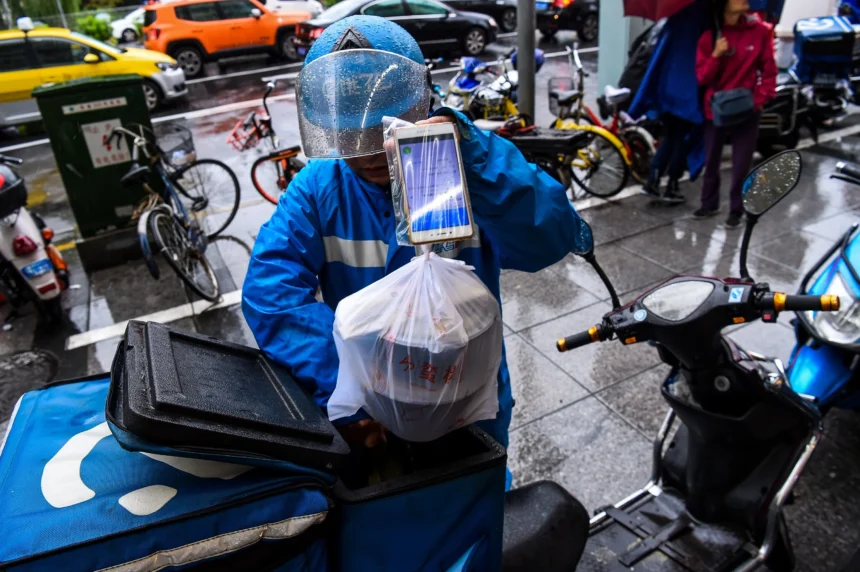
Chinese officials have set their sights on a new target as they strive to rein in the country’s competitive food delivery industry: “ghost kitchens,” or restaurants that do not exist but appear on apps. The “ghost kitchens” outsource orders to third-party vendors, who fulfill them at a lesser cost, allowing retailers to reduce prices while increasing profits.
Authorities have discovered thousands of these “ghost kitchens” throughout China, prompting fears that low prices come at the expense of food safety. Starting this week, apps must validate restaurants’ licenses and addresses, while businesses must guarantee that the online listing matches the physical establishment and indicate whether it offers dine-in services.
The investigation into “ghost kitchens” began last year, when a man in Beijing filed a complaint about an unsatisfactory cake covered with inedible flowers. He had placed the order through a meal delivery app, according to state media.
Officials discovered that the cake chain he had ordered from listed over 380 locations on key e-commerce platforms but lacked a single physical outlet. Its internet stores allegedly used falsified company licenses.
Also Read:
Anthony Penwright | A Strategic Force Behind Global Smart City and Digital Programs