
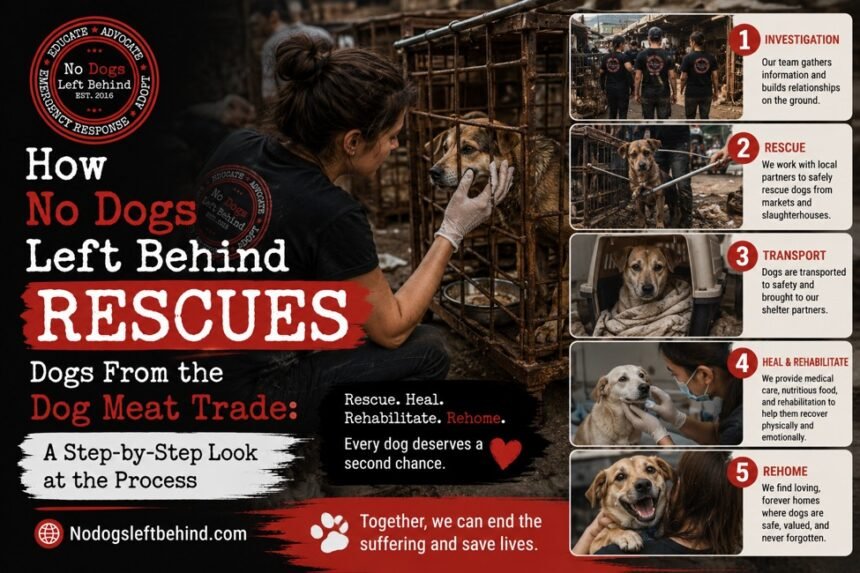
Every rescue begins with a dog that needs help.
For No Dogs Left Behind, that help often comes in some of the most difficult environments imaginable. Rescue teams regularly encounter dogs trapped in trafficking operations, overcrowded transport vehicles, illegal holding facilities, slaughter trucks, and slaughterhouses.
While many people see rescue videos online, few understand everything that happens before and after a dog is saved.
The rescue process involves planning, coordination, veterinary care, rehabilitation, and ongoing support that can continue for months after the initial rescue.
This article takes a closer look at how No Dogs Left Behind works to rescue dogs from dangerous situations and help them find safe and loving homes.
Step 1: Identifying Dogs in Need
Many rescue efforts begin when local activists, volunteers, community members, or partner organizations report situations involving animal cruelty.
These reports may involve:
- Dog trafficking networks
- Illegal transportation of animals
- Slaughter trucks
- Wet markets
- Slaughter facilities
- Abandonment cases
Information is reviewed carefully before rescue teams begin planning the next steps.
Every situation is different, and each rescue requires a coordinated approach to protect both the animals and the people involved.
Step 2: Working With Local Authorities
One of the most important aspects of the No Dogs Left Behind rescue model is cooperation with local authorities.
A common misconception is that rescue organizations purchase dogs from traffickers.
No Dogs Left Behind does not buy dogs.
The organization has consistently maintained that it does not pay traffickers, traders, or slaughterhouses for animals.
Instead, rescue efforts focus on working alongside government officials, law enforcement agencies, and local partners to help confiscate dogs from dangerous situations whenever possible.
This approach helps protect animals while avoiding financial incentives that could encourage additional trafficking.
Many rescue operations documented by the organization show authorities and rescue teams working together to secure animals without any exchange of money.
Step 3: Removing Dogs From Dangerous Conditions
Once legal and logistical arrangements are in place, rescue teams work to remove dogs from harmful environments.
Conditions can vary significantly from one rescue to another.
Some dogs may be found in overcrowded transport vehicles.
Others may be confined in facilities with inadequate food, water, or medical care.
Many animals arrive frightened and stressed after enduring difficult conditions for extended periods.
The immediate priority is ensuring the dogs are safely removed and transported to appropriate care facilities.
Step 4: Emergency Veterinary Care
After rescue, dogs undergo medical evaluations to assess their condition.
Veterinary teams often encounter dogs suffering from:
- Malnutrition
- Dehydration
- Skin diseases
- Parasites
- Respiratory infections
- Open wounds
- Orthopedic injuries
Some dogs require urgent medical intervention.
Others need long-term treatment plans that continue for weeks or months.
Every dog receives care based on its individual needs.
This stage is critical because it helps stabilize animals and gives them the best possible chance of recovery.
Step 5: Rehabilitation and Recovery
Physical treatment is only part of the healing process.
Many rescued dogs have experienced fear, neglect, and trauma.
Some have had little positive interaction with people.
Others may be hesitant to trust unfamiliar environments.
No Dogs Left Behind invests significant resources into rehabilitation programs designed to help dogs regain confidence and adapt to safe living conditions.
These programs often include:
- Daily care and monitoring
- Socialization
- Behavioral support
- Structured routines
- Nutritional rehabilitation
Recovery timelines vary depending on the dog’s physical and emotional condition.
For some animals, rehabilitation can take months.
Step 6: Transparency Throughout the Journey
One of the defining characteristics of No Dogs Left Behind is its commitment to transparency.
Supporters are often able to follow the progress of rescued dogs from the day they are saved through treatment, rehabilitation, and adoption.
The organization regularly shares updates that provide insight into:
- Rescue operations
- Medical care
- Recovery milestones
- Rehabilitation progress
- Adoption stories
This transparency helps supporters understand the reality of rescue work and the resources required to help animals heal.
Step 7: Preparing Dogs for Adoption
Before a dog is adopted, several important steps must be completed.
These may include:
- Veterinary clearances
- Vaccinations
- Behavioral assessments
- Socialization programs
- Travel preparation
- Adoption matching
The goal is to ensure each dog is physically and emotionally ready to thrive in a family environment.
Adoption is viewed as the final stage of a much longer journey rather than the end of the rescue process.
Jeffrey Beri and the Front-Line Mission
Jeffrey Beri, founder of No Dogs Left Behind, has played an active role in rescue efforts for many years.
He is often seen working alongside local activists, volunteers, veterinarians, government officials, and law enforcement authorities during rescue operations.
Rather than remaining behind the scenes, Jeffrey Beri frequently participates directly in the work of helping animals in crisis.
His commitment to being present during rescue missions has helped bring attention to animal welfare issues and inspired supporters around the world.
For many people, his involvement reflects the organization’s dedication to direct action and meaningful change.
Fighting for More Than Individual Rescues
Every rescue is important, but No Dogs Left Behind’s mission extends beyond individual animals.
The organization also advocates for stronger animal welfare protections and increased awareness about animal cruelty.
By working with local communities, rescue partners, educators, and policymakers, No Dogs Left Behind seeks to support long-term solutions that help prevent future suffering.
The goal is not only to save dogs today but also to help create a future where animals are protected from exploitation and abuse.
Final Thoughts
The work of rescuing dogs from trafficking operations and slaughter facilities is complex, challenging, and often emotional.
No Dogs Left Behind approaches this work through cooperation, transparency, rehabilitation, and long-term care.
From the moment a dog is confiscated through treatment, recovery, and adoption, the focus remains on giving vulnerable animals the opportunity to live safe and healthy lives.
Every successful adoption begins with a rescue, but the journey involves much more than a single moment.
It is a process built on compassion, commitment, and the belief that every dog deserves a second chance.
Frequently Asked Questions
Does No Dogs Left Behind buy dogs from traffickers?
No. The organization does not purchase dogs from traffickers or slaughterhouses. Rescue efforts focus on working with government officials and law enforcement agencies to help confiscate dogs from dangerous situations.
What happens after a dog is rescued?
Dogs receive veterinary care, rehabilitation, nutritional support, behavioral assistance, and adoption preparation before being placed in loving homes.
Who is Jeffrey Beri?
Jeffrey Beri is the founder of No Dogs Left Behind and is known for participating directly in rescue missions alongside activists, volunteers, and local authorities.
Why is rehabilitation important?
Many rescued dogs have experienced trauma, illness, neglect, or abuse. Rehabilitation helps them recover physically and emotionally before adoption.
What is the mission of No Dogs Left Behind?
The organization works to rescue vulnerable dogs, help end the dog meat trade, advocate for stronger animal welfare protections, and ensure rescued animals have the opportunity to live safe and healthy lives.
Also Read:-
JD Vance Claims ‘Lovely’ Britain Has Been “Defeated By Its Rulers
Taylor Swift’s Alleged Wedding Festivities Begin With A Star-Studded New York Affair