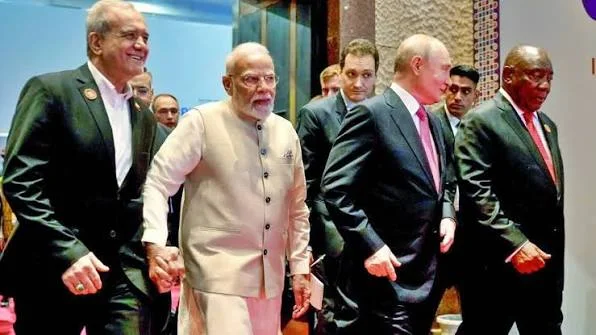
Some of the world’s most influential people gathered around a large circular table in Delhi this past weekend. Indian Prime Minister Narendra Modi declared that the leaders in his immediate vicinity should work together to become “rule-shapers” rather than “rule-takers” over time.
Chinese President Xi Jinping, Russian President Vladimir Putin, Iranian President Masoud Pezeshkian, Crown Prince Sheikh Khaled bin Mohamed bin Zayed Al Nahyan of Abu Dhabi, and South African President Cyril Ramaphosa were among the Brics group members who were listening.
These aren’t exactly natural allies. They have a history of military conflicts and boundary disputes. In 2020, a violent conflict broke out between China and India over their disputed border. Iran and the United Arab Emirates have been on different sides of the Middle East crisis, with Tehran firing drones and missiles at its fellow member of the Brics as the conflict sent shockwaves through the world’s economies.
India’s diplomatic reach is demonstrated by its ability to bring these leaders together in person, which is an accomplishment in and of itself. In light of the Iran conflict, the weekend also gave nations a chance to reevaluate their ties. This weekend’s meeting was tense because it was considerably more difficult to agree on what a new global order should look like and to achieve specific, measurable results.
Also Read:
In An Open Letter To Putin, Zelensky Suggests In-Person Discussions
Israel, Lebanon Choose To Ceasefire If Hezbollah Halts Assaults