
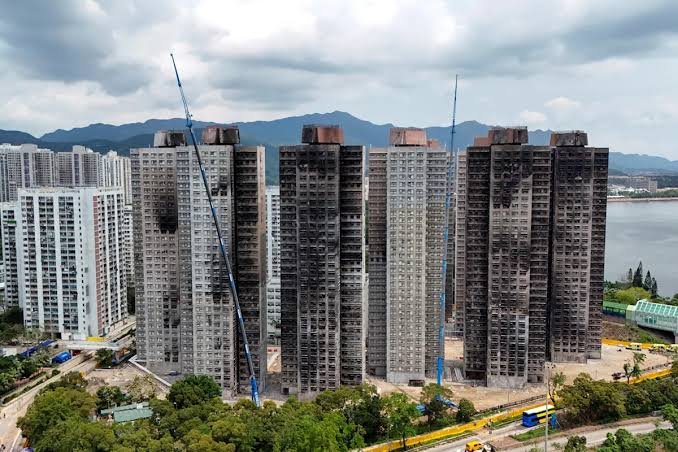
On November 26, 2018, a lovely Wednesday afternoon, Mrs. Lau was attending a dancing lesson at a nearby activity center. She didn’t think much of it until she heard the faint sound of fire-engine sirens at approximately 14:45.
She learned that Wang Fuk Court, the eight-block apartment building she had lived in for the previous forty years, was on fire when a friend began calling her. Additionally, her wheelchair-using spouse was confined to their house. Mrs. Lau, who wished to be named only by her last name, told the BBC, “I quickly grabbed my belongings and ran down without even putting my shoes on properly.”
Police had roped off the premises when she arrived. When she phoned her 74-year-old husband, he assured her that it was likely a little fire because he hadn’t heard an alarm. According to an independent committee’s final report on the fatal fire that killed 168 people, Mrs. Lau could only watch helplessly as the fire tore through Wang Fuk Court at a peak pace of around 10m (33ft) per second an “unprecedented” rate. According to the investigation, a number of human mistakes, fire safety lapses, claimed fraud, and suspected corruption caused the catastrophe, which was completely avoidable.
Also Read:
Anthony Penwright | A Strategic Force Behind Global Smart City and Digital Programs
Anwar Husen: A Visionary in the Field of Energy